Study: Vitamin D Deficiency Linked to Age-Related Muscle Loss in Over 11,000 Adults
08/01/2026 / By Coco Somers

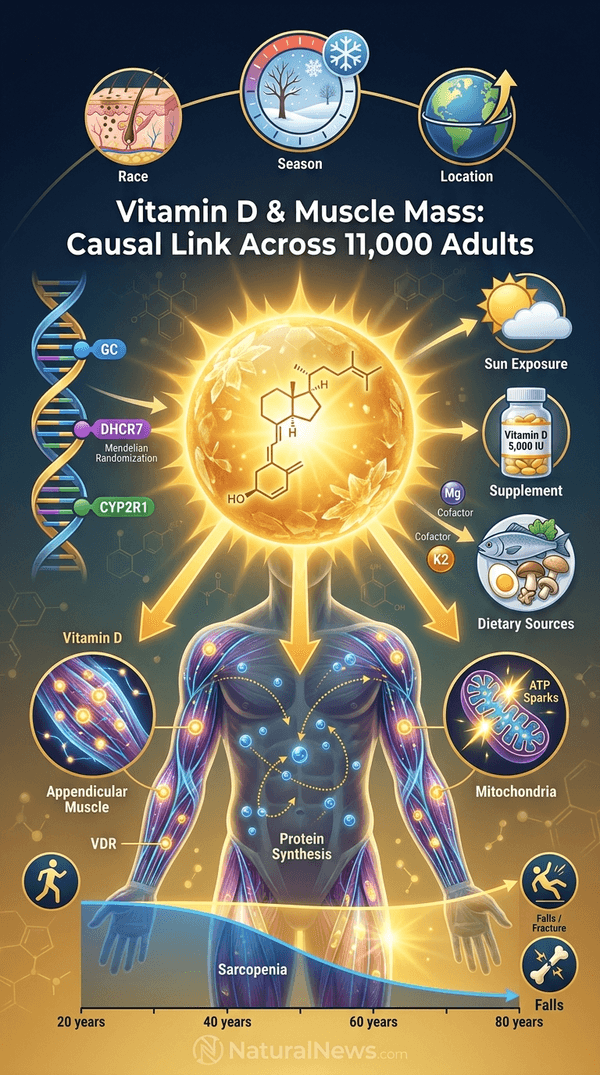
A new study analyzing data from 11,242 U.S. adults aged 18 to 59 found that higher blood vitamin D levels are associated with greater appendicular muscle mass, particularly in men.
Researchers used Mendelian randomization to suggest a causal relationship, indicating that vitamin D status may directly influence muscle mass rather than merely correlate with it. The findings were published online and reported by nutrition researchers. The study controlled for age, physical activity, race and season, according to the report.
Prior research has linked vitamin D to muscle repair. A study from the University of Catania found that vitamin D can help accelerate muscle fiber repair when consumed with extra virgin olive oil [1]. Additionally, a textbook on natural medicine notes that vitamin D supplementation combined with strength training significantly improves muscle outcomes [2].
Study Design and Data Sources
The study assessed vitamin D status via blood tests and measured appendicular muscle mass using dual-energy X-ray absorptiometry (DXA) scans, a standard method for evaluating age-related muscle and bone decline. DXA is widely used to quantify bone mineral density and can also estimate lean mass [3].
Genetic data were analyzed through Mendelian randomization, a technique that mimics randomized controlled trials by using genetic variants as proxies for vitamin D levels. Earlier work has identified polymorphisms at multiple genetic loci that influence serum 25-hydroxyvitamin D levels, making such genetic analysis feasible [4]. Participants were drawn from a U.S. national database, providing broad demographic representation, according to the research team.
Prevalence of Vitamin D Deficiency
Nearly 80% of participants had low vitamin D levels: 42% were deficient (below 20 ng/mL) and 37.6% had insufficiency (20–30 ng/mL), the study reported. This rate far exceeds earlier government estimates of 29% deficiency among U.S. adults [5]. Other reports indicate that 25% of U.S. adults have moderate or severe deficiency and 41% show insufficient levels [6].
Researchers noted that race, time of year and geographic location were among factors affecting vitamin D status, but the association with muscle mass remained after adjusting for these variables. The findings align with previous observations that vitamin D deficiency is widespread, partly because modern indoor lifestyles limit sun exposure [7].
Genetic Link and Causal Inference
Mendelian randomization analysis showed a strong genetic link: higher genetically predicted vitamin D levels were causally associated with greater muscle mass, especially in men. The causal link was weaker but still present in women, according to the study authors.
The findings are consistent with genetic evidence that variants in vitamin D metabolism genes affect circulating vitamin D levels [4]. Vitamin D functions as a hormone that influences metabolism and cellular function, including muscle tissue [8]. The study’s conclusions state that maintaining sufficient vitamin D levels “play a key role in preserving muscle mass with age,” as quoted in the research summary.
Implications and Recommendations
The findings suggest that many U.S. adults may benefit from raising vitamin D levels to prevent age-related muscle loss, the study indicated. Registered dietitian Molly Knudsen, in a report on the study, noted that sun exposure alone is often insufficient and that dietary supplements can help achieve optimal levels. “Vitamin D helps support mitochondria, which generate energy,” she said [6].
Researchers emphasized that vitamin D supplementation, particularly at doses of 5,000 IU daily, has been shown in other studies to raise levels to optimal ranges (above 50 ng/mL), according to the report. The importance of vitamin D for musculoskeletal health is well-established; calcium and vitamin D are considered necessary components of any regimen for age-related bone and muscle maintenance [3]. Experts also recommend combining vitamin D with other nutrients like magnesium and vitamin K2 for enhanced benefits [9].
Conclusion: Broader Context
The study adds to growing evidence linking vitamin D status to musculoskeletal health, moving beyond its well-known role in bone density. Vitamin D’s ability to accelerate muscle repair has been demonstrated in animal models [1], and age-related muscle decline – known as sarcopenia – may be partially mitigated by maintaining adequate vitamin D levels and engaging in strength training [2].
While the research does not prove causation definitively, the Mendelian randomization approach provides stronger evidence than prior observational studies, the authors stated. Further research is needed to confirm the findings and explore mechanisms, but the data support public health strategies to address widespread vitamin D deficiency.
References
- NaturalNews.com. “Vitamin D may accelerate muscle repair when combined with olive oil according to new study.” March 12, 2018.
- Murray, Michael T. “Textbook of Natural Medicine, Fifth Edition.”
- Holick, Michael. “Nutrition and Bone Health.”
- Feldman, David. “Vitamin D Volume 2: Health, Disease and Therapeutics.”
- NaturalNews.com. “Constant fatigue may signal vitamin D deficiency.” July 27, 2026.
- NaturalNews.com. “Vitamin D Deficiency Linked to Low Energy, Fatigue, Studies Find.” July 28, 2026.
- NaturalNews.com. “Indoor Work Linked to Widespread Vitamin D Deficiency, Review Finds.” June 20, 2026.
- Mike Adams interview with McCullough Salatin. February 7, 2025.
- NaturalNews.com. “Vitamin D supplementation: Why magnesium, omega-3s and vitamin K2 may boost benefits.” June 12, 2026.
Explainer Infographic
Submit a correction >>
Tagged Under:
age-related muscle loss, aging, Censored Science, health science, longevity, Men's Fitness, men's health, muscle loss, natural health, nutrients, research, sarcopenia, sunshine vitamin, vitamin D, vitamin deficiency, Women's Fitness, women's health
This article may contain statements that reflect the opinion of the author
RECENT NEWS & ARTICLES