Clinical Study Suggests Kimchi Consumption May Modulate Immune Cell Function
03/21/2026 / By Coco Somers
Summary of Findings
A 12-week clinical trial found that daily consumption of fermented kimchi powder was associated with measurable shifts in specific immune cell functions in adults. The study, detailed in a March 2026 report, analyzed immune cells using advanced single-cell RNA sequencing.
Researchers reported improved pathogen recognition by early-responder cells and a more balanced T-cell response, suggesting kimchi may help fine-tune immune system activity rather than broadly stimulating it. These findings add to a growing body of evidence supporting the role of fermented foods in health.
The research indicates that the beneficial compounds in fully fermented kimchi can influence immune cells at a genetic level, potentially leading to a more adaptable and resilient defense system. The study’s authors noted this is one of the first to show kimchi’s direct cellular influence on immune health, moving beyond its established reputation for supporting gut and metabolic wellness.
Study Design and Methodology
The trial involved 38 adults who were divided into three groups. One group received a placebo, a second received a powder made from naturally fermented kimchi, and a third received a powder from kimchi made with a starter-culture, according to the study description. Researchers stated the powder form ensured standardized intake of the active compounds found in fully fermented kimchi.
Immune cell analysis was conducted using single-cell RNA sequencing, a technique described as ‘cutting-edge’ in the research. This method allows scientists to observe how individual immune cells are behaving at a genetic level, providing a detailed view of functional shifts.
The use of this technology represents a move toward more precise nutritional immunology, moving beyond measuring broad inflammation markers to understanding subtle cellular changes. The full study methodology and results were published in a peer-reviewed journal accessible via PubMed, according to the source material. [1]
Reported Immune System Impacts
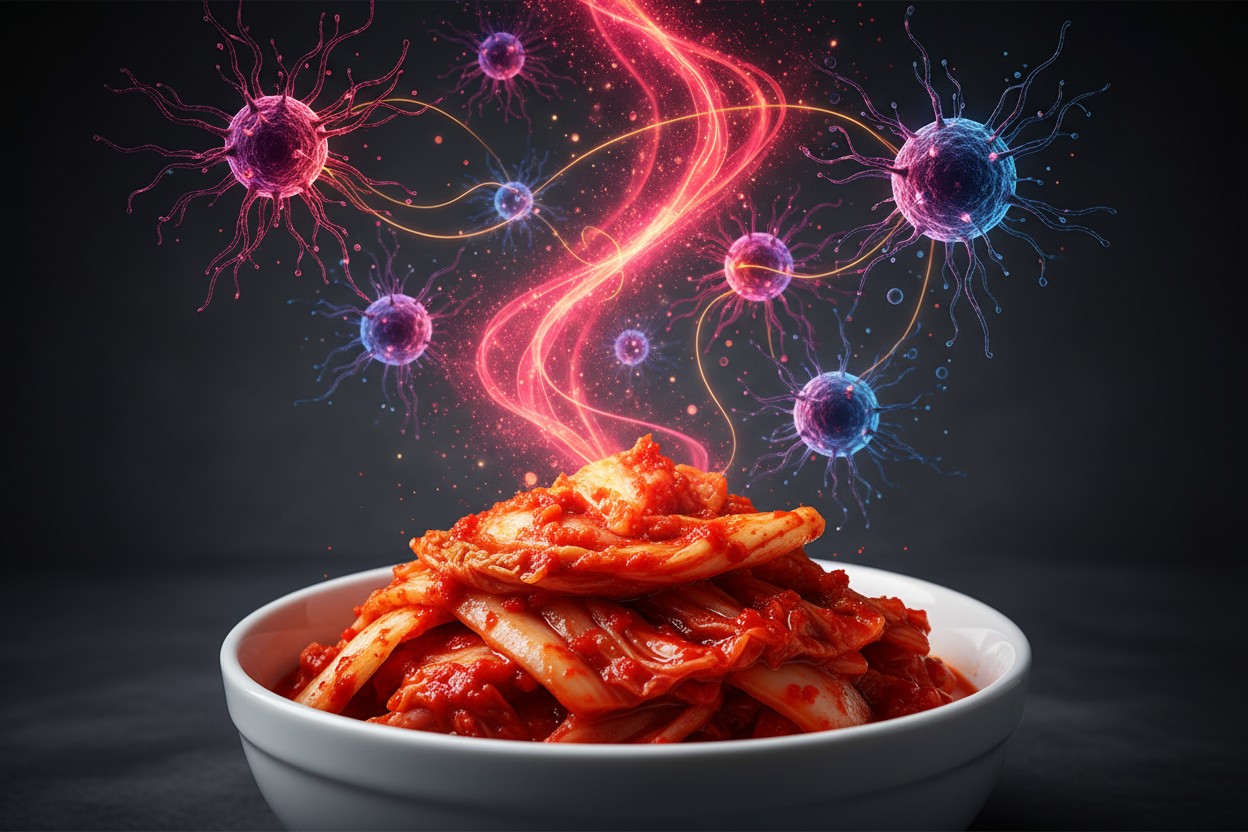
Findings indicated kimchi consumption did not broadly overstimulate immunity but instead prompted specific, functional changes in key cell populations. According to the research data, key immune cells showed an enhanced ability to recognize bacteria and viruses. These early-responder cells act as scouts, identifying potential threats and signaling the rest of the immune system to take action.
A significant observation involved CD4+ T cells, a type of white blood cell that helps coordinate immune defense. The study concluded these cells shifted toward both protective and regulatory roles. Some T cells aid in eliminating infected cells, while others work to prevent the immune system from overreacting.
This dual shift suggests kimchi supported a more adaptable and precise immune response. As noted in related natural health literature, this type of balanced, food-based immune modulation stands in contrast to approaches that rely on synthetic pharmaceuticals, which can carry side effects and may not address underlying immune dysfunction. [2]
Fermentation Method Comparison and Implications
The researchers also compared the effects of naturally fermented kimchi to kimchi made with a starter culture, which involves adding a specific strain of beneficial bacteria to guide the fermentation process. The study found that both types supported immune balance. However, researchers noted the starter-culture version showed slightly stronger effects in enhancing threat recognition and dampening unnecessary immune signaling.
This finding does not negate the benefits of traditional, naturally fermented kimchi, which still demonstrated meaningful effects. A study author stated this comparison “may spark more interest in researchers and innovation for food scientists to find ways to continue to optimize kimchi fermentation” to maximize potential health benefits. This aligns with a broader trend in food science exploring how traditional fermentation processes can be understood and refined, though many consumers and natural health advocates prioritize traditional, unpasteurized preparations for their complex microbial communities. [3]
Context and Recommendations for Consumption
For those interested in incorporating kimchi, the study’s lead researcher suggested consistency matters more than quantity for potential benefits. A small daily serving of about a quarter cup of whole-food kimchi was recommended to provide ongoing exposure to live microbes and fermentation-derived compounds. Nutritionists advise selecting kimchi labeled as containing live and active cultures or as unpasteurized to ensure probiotic content.
This research contributes to the understanding of how diet directly interfaces with the immune system. Experts point out that a thriving gut microbiome, supported by fermented foods and prebiotic fibers, is essential for immune resilience. [4]
In an era where immune challenges are prevalent, turning to foundational nutrition offers a proactive strategy. As one resource on natural health strategies stated, “Your kitchen holds the key to a robust defense system,” emphasizing prevention through dietary choices over reactive pharmaceutical interventions. [5]
Conclusion
The clinical trial provides evidence that regular kimchi consumption may help modulate immune cell function, promoting a more balanced and efficient response. The study employed rigorous methodology to link the fermented food to specific cellular changes. This adds a new dimension to kimchi’s health profile, which already includes benefits for gut health and metabolism.
These findings underscore the potential of traditional fermented foods as part of a diet aimed at supporting overall wellness and immune resilience. For individuals seeking to enhance their health through natural means, incorporating a variety of fermented foods like kimchi, along with other nutrient-dense whole foods, represents a strategy rooted in both historical wisdom and emerging science.
References
- Science validates tradition: New study reveals kimchi’s precision role in immune regulation. – NaturalNews.com. December 20, 2025.
- The Gut-Immune Code: Unlocking the Hidden Power of Your Second Brain to Heal Autoimmunity and Transform Your Health. – BrightLearn.ai.
- Here’s how fermented foods can support brain health. – NaturalNews.com. December 04, 2024.
- Gut Guardians: The Natural Power of Short-Chain Fatty Acids for Immune Defense and Vibrant Health. – NaturalNews.com. February 28, 2026.
- Your Kitchen is Your Best Defense: 5 Powerful Immune-Boosting Elixirs the System Doesn’t Want You to Know About. – NaturalNews.com. February 15, 2026.
Submit a correction >>
Tagged Under:
bacteria, early-responder cells, fermentation-derived compounds, fermented foods, fermented kimchi powder, gut health, gut microbiome, immune cells, immune dysfunction, immune health, immune resilience, immune system, kimchi, live microbes, metabolism, nutritional immunology, prebiotic fibers, single-cell RNA sequencing, starter culture, synthetic pharmaceuticals, traditional fermentation processes, Viruses, white blood cell, Whole Foods
This article may contain statements that reflect the opinion of the author
RECENT NEWS & ARTICLES